 Inside China Tech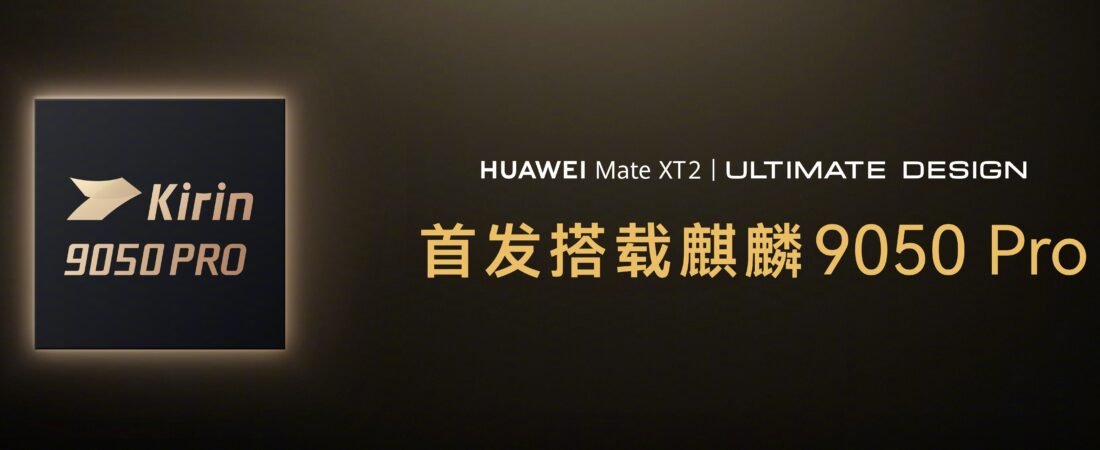
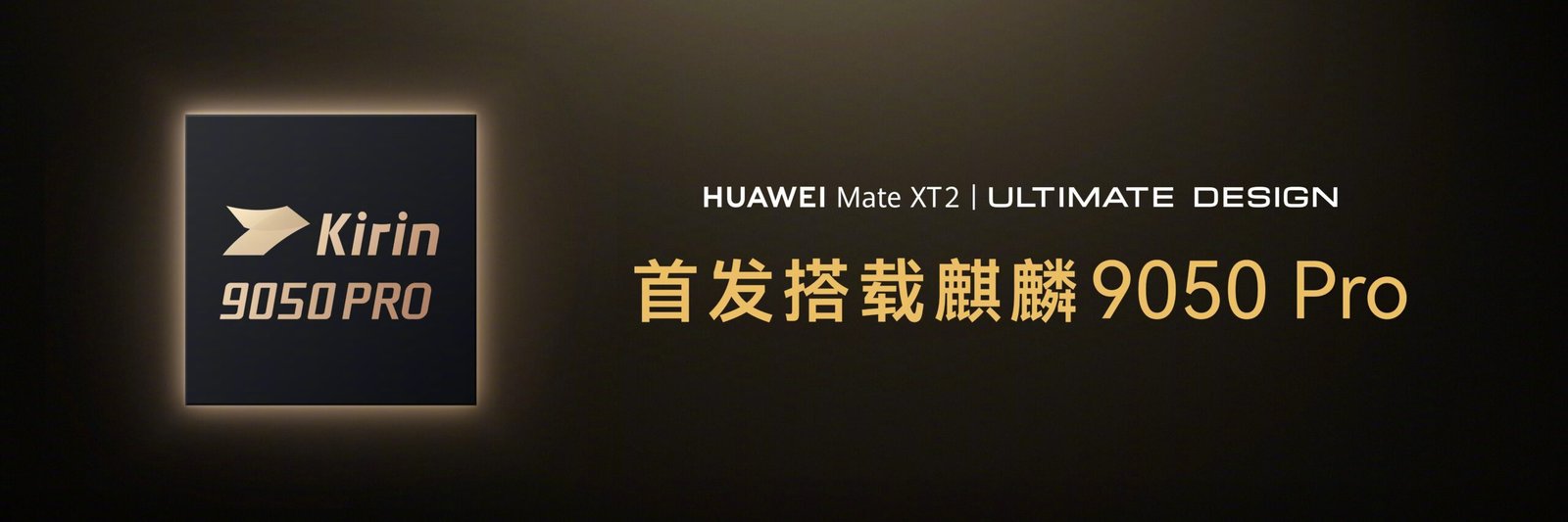
At Huawei’s launch event in Guangzhou on September 7, Richard Yu officially announced that the Huawei Mate XT 2 will be the first device to ship with the Kirin 9050 Pro, the company’s newest flagship smartphone chip. It is also the first smartphone SoC built on a logic-folding architecture derived from Huawei’s Taoding’s law research.
What makes the Kirin 9050 Pro different?
Instead of laying out all logic units on a single flat plane, the Kirin 9050 Pro stacks active layers vertically inside one die and adds through-layer interconnects, which Huawei likens to adding elevators inside the chip. The folded layout shortens signal paths, cuts latency, and boosts performance without relying solely on a more advanced process node. Huawei had not introduced an entirely new Kirin flagship chip on a global launch stage since the Mate 40 series six years ago.
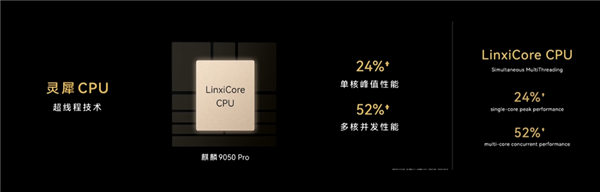
Huawei says the new chip, through tighter integration of hardware, software, chip design, and cloud services, delivers a 42% overall performance improvement over the Kirin 9020 XTs found in the previous Mate XT. The single-core peak is up 24%, while multi-core concurrent performance rises 52%.
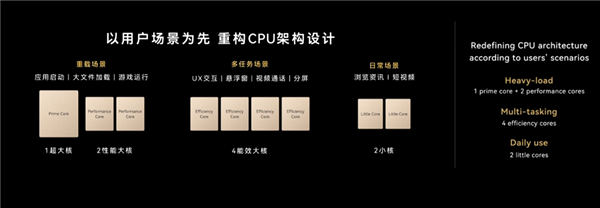
CPU, GPU, and NPU upgrades
The CPU uses Huawei’s own multi-threaded LinxiCore design with a 1+2+4+2 cluster: one prime core, two performance cores, four efficiency cores, and two little cores. The graphics side uses the Maleoon GPU with hardware ray-tracing acceleration, supporting 50 million real-time rays. Huawei claims rendering performance is 142% faster and 4K video export is 40% quicker than the previous generation.
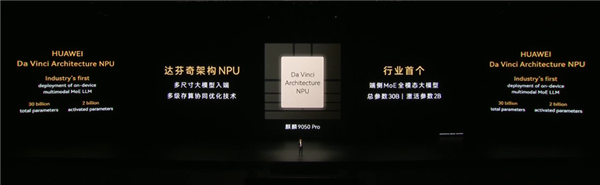
For AI, the chip keeps the Da Vinci architecture NPU and becomes the first mobile platform to run an on-device Mixture-of-Experts (MoE) full-modal large model with 30 billion total parameters. The integrated Balong modem also raises satellite paging success rate by 42%, according to Huawei’s figures.
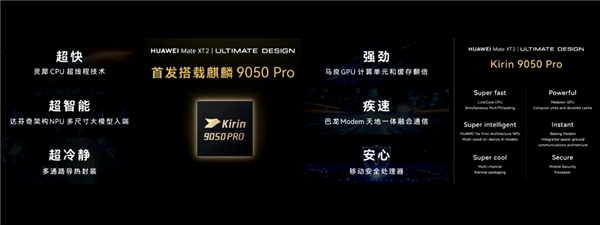
The Kirin 9050 Pro represents Huawei’s attempt to escape the traditional race for smaller transistors by rethinking how a chip is laid out. Whether the logic-folding approach can close the gap with the latest 3nm flagships will depend on real-world testing, but the return of a detailed Kirin launch marks a notable step for Huawei’s silicon roadmap.
Comments
Join Inside China Tech to join the conversation.